Why is meat at this party?
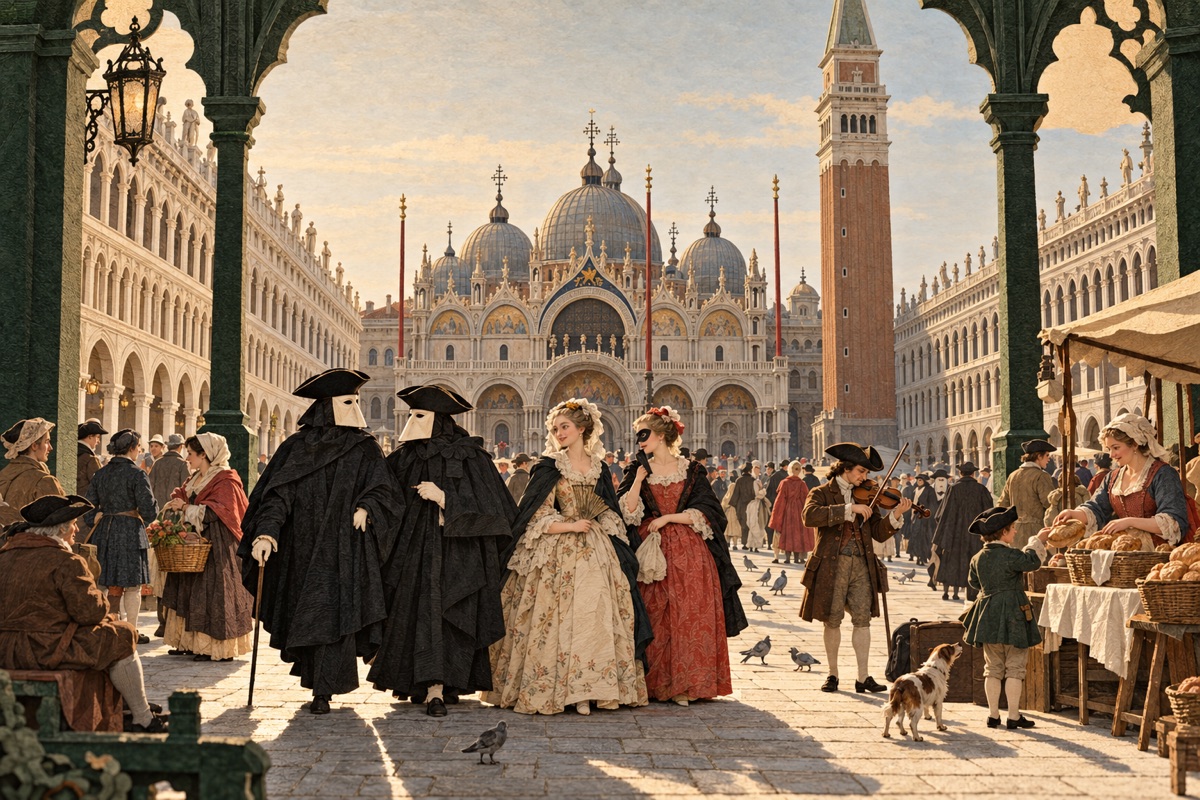
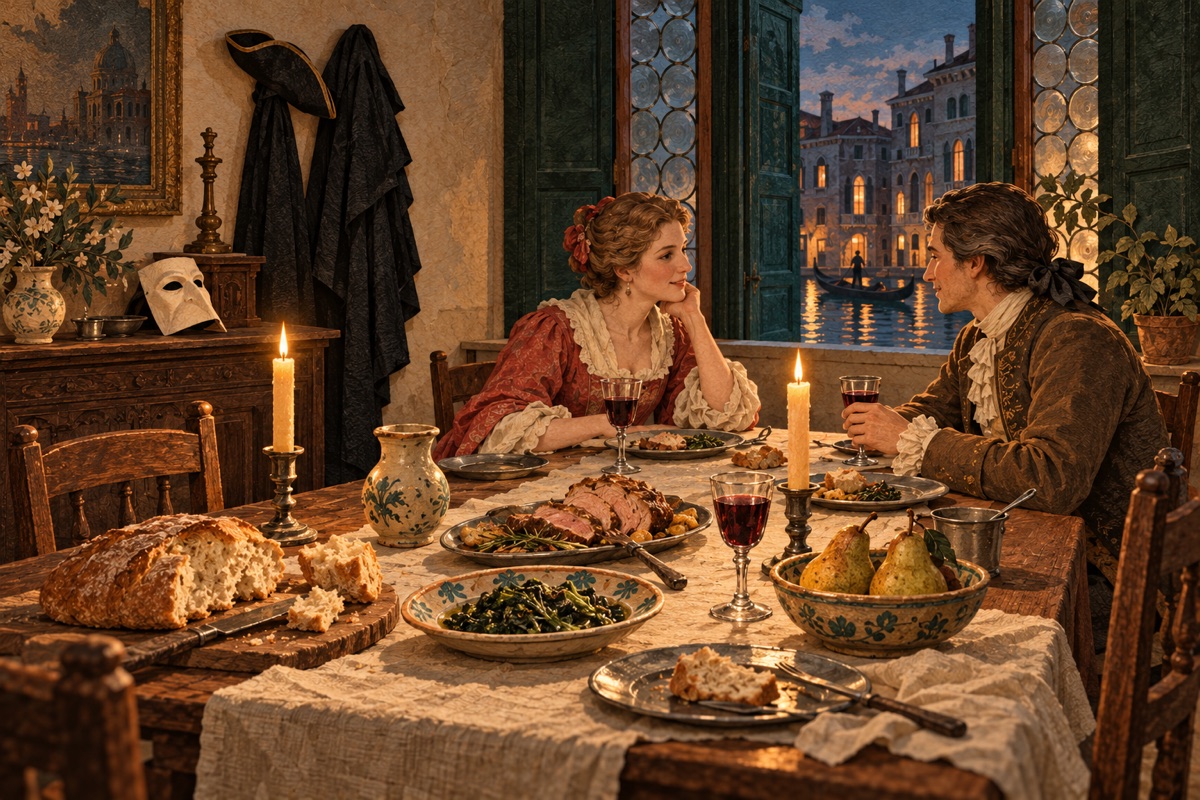
In eighteenth-century Venice, masks cross the square and a feast is under way. Why call this celebration a carnival? Its name looks ahead to Lent, a religious season of prayer and restraint that included restrictions on meat. English carnival comes from Italian carnevale, an altered form of earlier carnelevare: carne means meat, and levare means to remove. The celebration comes first; the change at the table follows. The name remembers that change.
A feast with a countdown
Why place a feast beside a season of restraint? In many places shaped by Catholic tradition, Lent leads toward Easter and brings prayer, fasting and self-discipline. Food rules have included restrictions on meat, though practices vary across times and places. Carnival belongs just before that change. The lively gathering and the quieter days are neighbouring parts of the religious calendar. Seen together, they explain why a celebration can carry a name that looks ahead to removing meat.

A carnival today
The name later travelled beyond its original religious calendar. Today carnival can describe a traditional celebration or a fair with games, stalls and performances. A school carnival, for example, may bring people together around games and entertainment on the school grounds. No connection with fasting or meat restrictions is needed in this use. The meaning has widened toward shared enjoyment, but the old name still carries a trace of the change at the table that helped shape it.
Take away the meat
Follow the forms carnelevare → carnevale → carnival. In the older Italian form, carne means meat and levare means to remove. The spelling changed, while the name remained connected with the turn toward Lenten restraint. English kept the name and extended its meanings. Picture a meat platter being carried away after a feast: that image joins the word’s parts to the calendar behind it.
Out in the world
Our school holds a carnival every spring.
By sunset, the square had become a carnival of music and color.
It was Shrove Tuesday in Venice, Carnival time.
The Carnival closed this day last week.
noun · a festival, fair or lively celebration
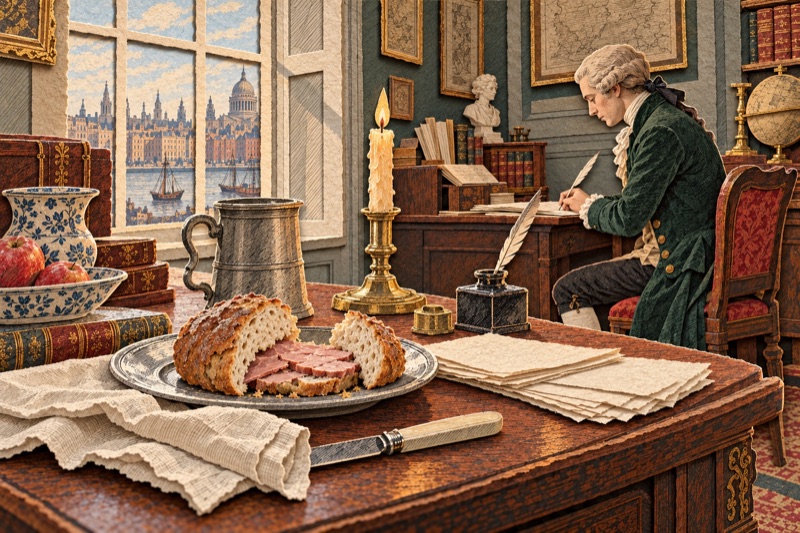
Which image gives the best clue to the older name?
See the answer and the clue
Carry away the meat
Earlier Italian carnelevare refers to removing meat. Music and masks evoke celebration, but they do not explain the name.
Explore this word ↗