A word has more than one kind of history
Etymology is the study of how words develop: their earlier forms, their journeys between languages, and the changes in what people mean by them. It asks a different question from a present-day definition. A dictionary definition helps you understand a word in a sentence now; its etymology helps explain how that word came to be available to the writer.
Think of a familiar house with several additions. Finding the oldest room tells you something valuable, but it does not tell you how every room is used today. In the same way, an older meaning can illuminate a modern word without being its secret, compulsory meaning. Start with current usage, then explore the building’s history.
Borrowing leaves a trail
English robot comes from Czech and is connected with robota, compulsory labour. That connection opens a question about work, rather than simply about metal bodies. The historical form gives you a point of entry; the modern word has its own range of uses.
When reading an etymology, keep the immediate donor language separate from any earlier ancestor. “Borrowed from French” and “ultimately from Latin” can both be true of one word. They describe different stops on a route. A language label is therefore more useful when you ask which stage it belongs to, instead of treating every older language as the direct source.
Meaning can travel without a new object
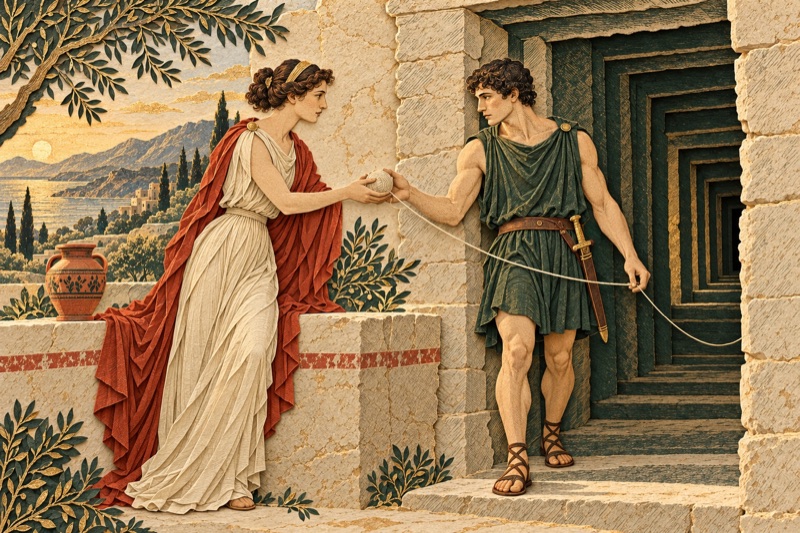
Clue was a spelling variant of clew, a ball of thread. The guiding thread of myth and folklore offers a bridge to the modern idea of something that helps solve a problem. The important movement is from a physical guide to a figurative one.
This is a good place to practise explaining a semantic bridge. Do not just pair “thread” with “evidence” and call the connection finished. Ask what the two things do: each can help someone find a way through difficulty. That shared function makes the change intelligible. It does not mean that every modern clue proves the answer, or that the English word itself is Greek.
A convincing split needs historical forms
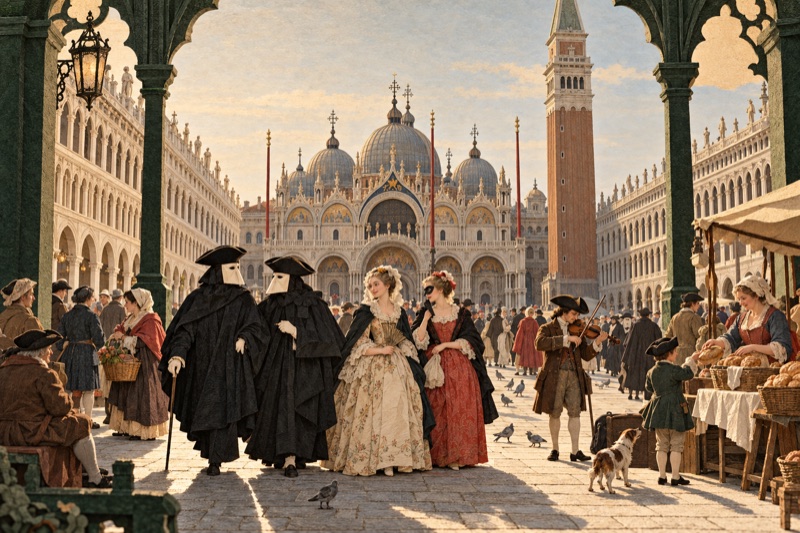
Carnival provides a useful warning against guessing from modern spelling. Merriam-Webster traces Italian carnevale through earlier carnelevare, associated with removing meat. The earlier form matters: a neat arrangement of today’s letters is not enough to establish a history.
You can invent a playful memory aid for any difficult spelling. Just label it as your memory aid. A personal image is doing a different job from a documented derivation. One helps you recall; the other makes a claim about what happened. Keeping those jobs distinct lets you enjoy imaginative explanations without accidentally teaching them as evidence.
Read an entry like a careful traveller
For your next unfamiliar word, make a small record with three parts: what it means in the sentence you found, one supported fact about its earlier form, and the change that connects the two. Add the dictionary link. If the source says “probably” or “uncertain,” preserve that word in your notes.
Treat dates with the same care. An earliest known example is evidence that a word was used by that point, rather than a recording of its first-ever spoken moment. You do not need a perfectly complete origin story to learn something worthwhile. A well-marked gap is more useful than a confident guess, and often gives you the most interesting question to follow next.