
Ask what the story would need to prove
A surprising word origin often arrives as a perfect miniature: one person, one moment, one ingenious explanation. Before repeating it, turn the miniature into a claim you can check. Is it about an earlier spelling, a first recorded use, the invention of an object, or the motive behind a name? These questions may require different evidence.
This does not mean that an entertaining account must be false. It means that entertainment is not the test. A useful explanation should make clear which part is documented and which part is interpretation. The following examples show how a small adjustment in wording can preserve the interest while removing a claim the evidence does not support.
Check the date against the number inside the word
Quarantine connects with Italian quaranta, forty. But the historical practice did not begin everywhere as a single unchanging forty-day rule. A 1377 measure at Ragusa, now Dubrovnik, prescribed thirty days; later periods of forty days connect with the familiar name. The CDC journal’s short etymological account keeps these stages distinct.
The practical lesson is to resist reading a whole institution directly out of a word. A number in a name can preserve one stage of a history without describing every earlier or later version. When taking notes, use a timeline with separate entries for the practice and the name. That simple format makes a misleading sentence such as “it was forty days from the very beginning” easier to catch.
Check a name connection against an invention claim
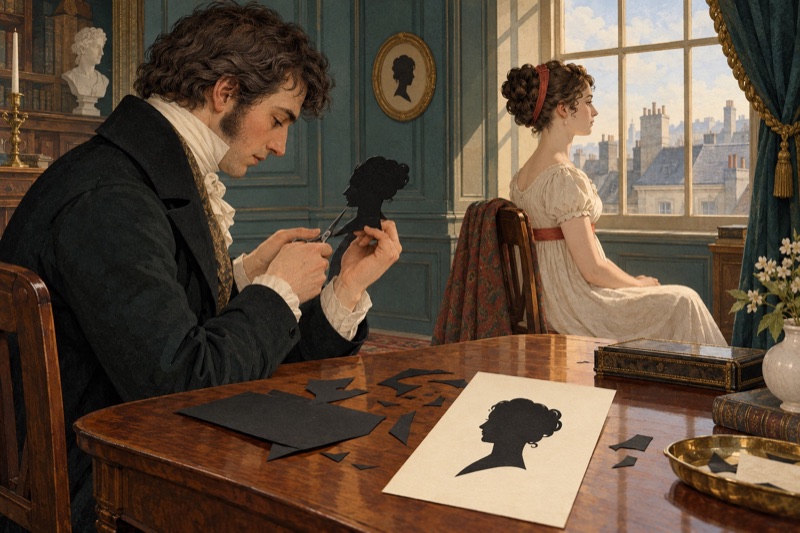
Silhouette is connected with the surname of Étienne de Silhouette. That gives us a person to investigate, but does not establish that he invented profile portraiture. Accounts of the reason for the naming also differ. The careful version keeps the surname connection and avoids turning one explanation of the motive into an uncontested fact.
Try applying this check to any word named after a person. Replace “invented by” with a question: what relationship is supported? The person could be a user, a populariser, an associated figure, or even the target of an action. If the evidence only gives a name association, stopping there is a complete answer to that part of the question, rather than a failure to tell a satisfying story.
Check the historical form against a clever modern split
Carnival offers another kind of temptation: a phrase that sounds memorable when fitted to the modern word. The stronger starting point is the recorded earlier Italian form carnelevare and its connection with removing meat. Following earlier forms is a better method than deciding that a pleasing translation must be the original explanation.
You can keep an attractive phrase as a teaching image, provided you identify what it is doing. Ask whether it is a documented form, a later interpretation, or your own mnemonic. These categories can sit beside each other on a page. They become misleading only when a reader is invited to treat them as interchangeable pieces of historical evidence.
Make a habit of useful uncertainty
Before sharing an origin, open a reliable dictionary entry and read the wording around its etymology, not just the headline. Preserve qualifiers, compare the claim with the source, and ask whether the date refers to an English use or an earlier form in another language. A link is most helpful when it supports the precise sentence you are passing on.
If two accounts disagree, identify the smallest point they share and the point still in dispute. You may be able to say confidently that a surname is involved while leaving the naming motive open. That kind of explanation remains vivid because the real question is still there. An honest boundary gives the next reader somewhere to investigate, instead of handing them a polished certainty that stops curiosity too soon.