One connection does not mean one kind of origin
Greek myth can reach an English word by several routes. A name may become part of a word’s history; a familiar story may explain a metaphor; or a modern reader may simply use an ancient scene as a memory aid. Those relationships are interesting precisely because they are different. Putting every example under “named after a Greek god” loses the most useful part of the explanation.
A good first question is therefore: what is actually being connected? Look for a recorded form, a name, or a change of meaning. Then keep the myth’s events separate from historical evidence. A text can show what a writer told about a god without proving that the event in the story took place.
Panic: a name behind a sudden fear
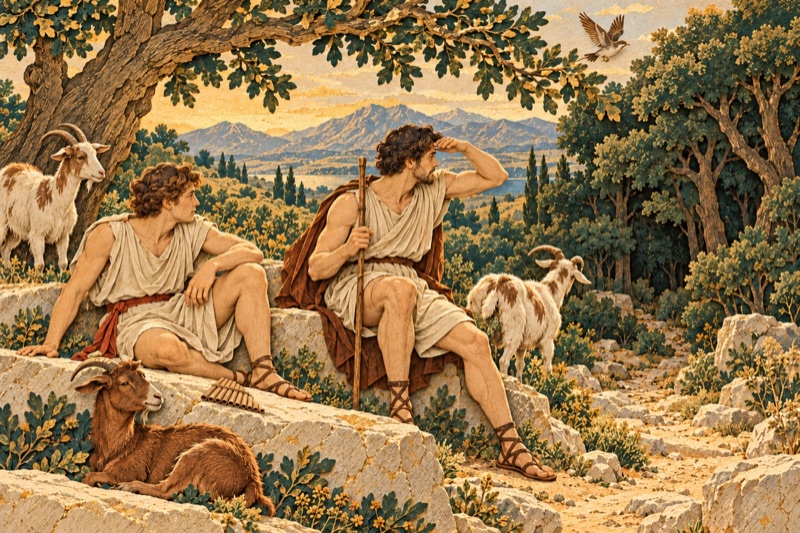
Panic is connected through French panique with Greek panikos, referring to Pan. The association belongs to beliefs about the god and the fear he was said to cause. This gives you a supported linguistic connection, rather than a reason to take the supernatural explanation literally.
For a learner, the useful contrast is between that older association and an ordinary sentence about sudden fear today. The person using panic does not have to be thinking about Pan. Try explaining the word without mentioning mythology first, then add the historical connection as a second layer. This keeps the present meaning clear while leaving the older imaginative world visible behind it.
Echo: hear the common noun as well as the character
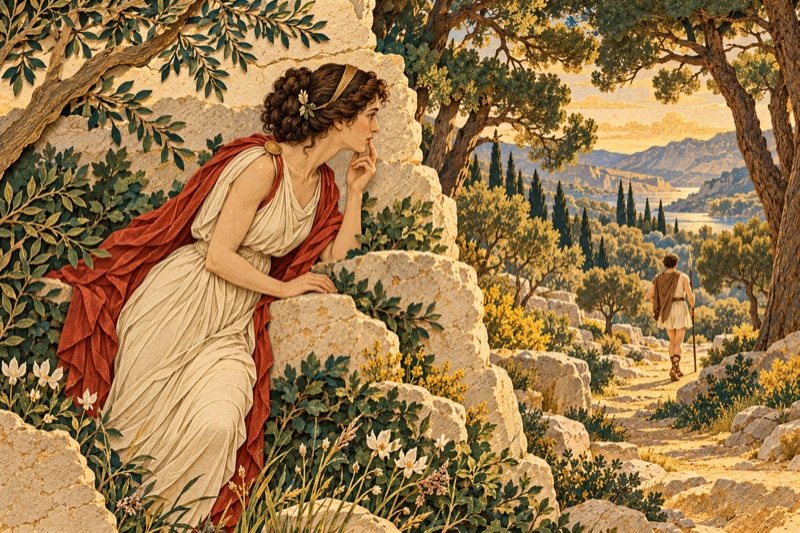
English echo ultimately connects with Greek ēchō, a word for sound or echo. Echo is also the name of a mythological nymph. The relationship is richer than a claim that a single later retelling invented the everyday word. Notice that a dictionary can distinguish the common noun from the character’s proper name.
Listen to what the ordinary English word can do. A sound may come back, but an idea can also be repeated. When reading a myth, ask which feature the story brings into focus; when reading a modern sentence, ask which meaning the writer needs. The myth makes an evocative companion to the word. It should not replace attention to the actual sentence.
Clue: an English thread through an ancient story
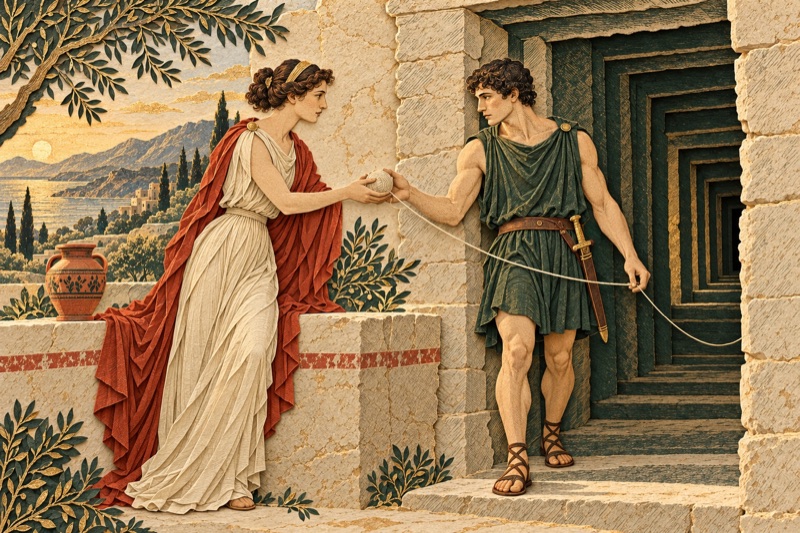
Clue is a different case. Its older relationship is with English clew, a ball of thread. The thread that guides someone through a maze supplies an image for the later figurative meaning. The familiar labyrinth story helps explain that image, but it does not make clue a Greek loanword.
This distinction is easy to test in your own notebook. Under “word history,” write the earlier English form. Under “story,” put the guiding thread. Under “bridge,” explain how guidance through a maze can become guidance through a problem. Three small labels prevent a memorable association from quietly becoming a false account of where the spelling came from.
Build a mythology shelf that stays precise
Try reading these three entries together. Panic gives you a divine name in a linguistic route; echo asks you to distinguish a sound word and a mythological character; clue shows how a narrative image can illuminate a metaphor. You now have a comparison, rather than three disconnected pieces of trivia.
When adding another word, record the exact relationship you can support. If you want to explore disaster next, ask about its older star-related elements and the beliefs behind them, rather than assuming another god must be hiding in its letters. Ancient stories and beliefs leave many kinds of traces. Learning to tell those kinds apart makes the language more interesting, not less magical to read.